
ABOUt This Project
Sources
The dataset’s core data was generated through remote sensing technologies operated by NASA. Data acquisition occurred in near real time, from the satellite instrument MODIS C6, for the six month period of peak fire activity from 2019-08-01 to 2020-01-11, providing a record of satellite fire detection over the Australian region. The original source of the datasets is the NASA Earthdata database, which includes all kinds of data from around the world collected by NASA’s many satellites. Additionally, our dataset was enhanced with the addition of ABS (Australian Bureau of Statistics) Shapefiles, which added State and SOS (Section of State) information to each data point.
Our dataset includes the location of the fires represented by a column of latitude and a column of longitude. It also includes brightness, which is determined by the temperature of the fire as well as its oxygen supply, which could help to indicate how intense the fire is and what materials are being burned. Along with brightness, it also captures the size of fires using scan, which captures the amount of pixels in the West-East direction, and track, which captures the amount of pixels in the North-South direction. It includes the acquisition data in one column as well as the acquisition time in another. It includes the satellite that the data was captured from as well as the instrument in two different columns, which likely will not be necessary for our analysis. Lastly, our dataset includes confidence, which is the likelihood that the data collected coincides with the usual expected data.
In addition to these datasets, our group looked into 18 literary articles regarding impacts of the black summer in terms of air quality, health, and the difference between how rural and urban communities reacted to the fires. We synthesized these sources to gain a better understanding of how the Australian fires impacted rural and urban communities. More information regarding our sources can be found below in our annotated bibliography.
All data visualizations were created by our team. All other imagery was either created by our team or sourced from Wikimedia Commons.
Processing Our Data
The dataset that we used was clean and did not require any additional cleaning. In order to make our dataset more effective, we used AI to process our data and add additional location information to each data point based on publicly available ABS Shapefile data. To create our visualizations we used Tableau to transform our data into clear charts that helped our team understand trends and highlight important insights. We also used Timeline.js to create our timeline displaying the intensity and changes of the fires over time and how communities took action to heal after the fires.
Presenting Our Narrative
To create our website, we designed the website through Webspace provided by the UCLA HumSpace domain. During our class discussion sections, our team met to brainstorm design ideas and visual layouts. We first outlined the content and layout of each page and assigned specific sections to individual team members. We established a cohesive look by applying the same color scheme and consistent formatting throughout the website.
Meet the team

Kate Trevino
Project Manager
Hi, my name is Kate Trevino. I am a third-year Statistics and Data Science major. As the project manager, my role was to organize meetings and assist with tasks of the whole team. I helped develop content throughout the website and make sure all tasks were completed in a detailed and timely manner.

Nicolas Distasi
Web designer/developer
Hey, I’m Nicolas. I’m a fourth year Design/Media Arts student. My main task as part of this team is to synthesize our content and narrative into a cohesive, engaging, and properly structured website.

Riona Onda
Data Specialist
Hi, my name is Riona and I am a third year Business Economics and Statistics/Data Science major. As the data specialist, I was responsible for cleaning, refining, and standardizing the dataset to ensure it was accurate and ready for analysis. I also ensured that all data was consistent, properly formatted, and usable for our team’s research and further interpretation.

Khushi Gupta
Content Developer
Hello, my name is Khushi and I am a third year business economics and Statistics/Data Science major. As the content developer, my role was to oversee the site’s main narrative and about page, and integrate data visualizations.

Jaskaran Singh
Data visualization specialist
Hi, my name is Jaskaran Singh. I am a third year statistics student. I am the Data Visualization Specialist for this project, and I am going to use tools to create data visualizations to uncover patterns in the data and then add those graphics to our site.
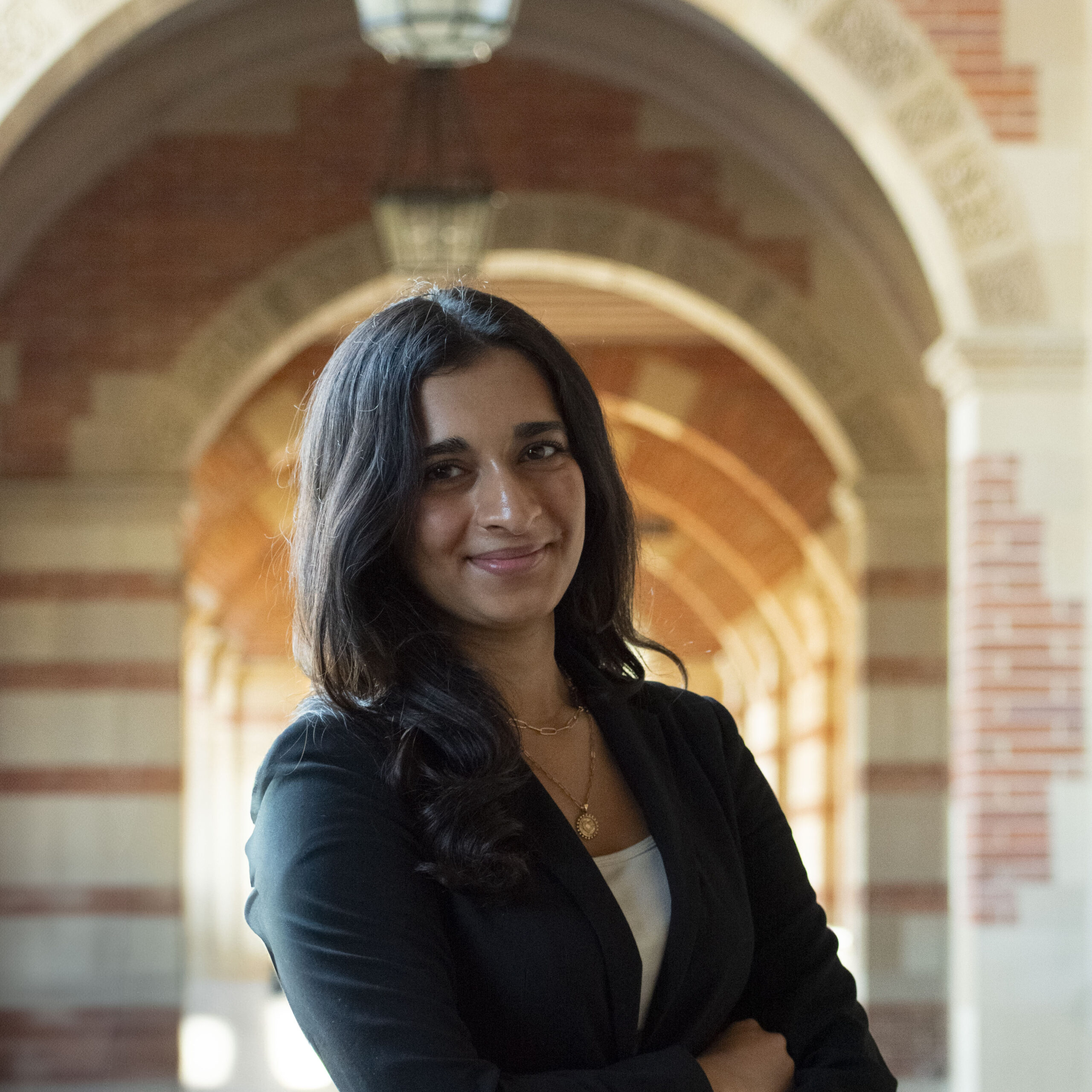
Ankitha Swamy
Editor
Hi, my name is Ankitha and I am a third year Statistics/Data Science and Economics major. As the editor, I maintained consistent design and readability among the website. I ensured that all elements of the project were present and free of organizational, spelling, and grammatical errors.
Bibliography
Filkov, Alexander I., et al. “Impact of Australia’s Catastrophic 2019/20 Bushfire Season on Communities and Environment. Retrospective Analysis and Current Trends.” Journal of Safety Science and Resilience, vol. 1, no. 1, 2020, pp. 44–56, https://doi.org/10.1016/j.jnlssr.2020.06.009.
The authors argue that the 2019-2020 “Black Summer” fires in Australia came at an unprecedented scale and severity, as it destroyed vast areas, burnt homes, and killed people and wildlife. They took information from the last 2 decades for the states of New South Wales, Victoria, and South Australia to recognize the unique nature of the Black Summer, and also took data from governmental departments, media releases, and news reports of the 2019-20 fires. This study is important because it provides an analysis of fire frequency, burned area, and human and property losses across three states, giving quantitative data of the disproportionate impacts of the 2019-20 fires between regions. This helps our thesis as it shows the effects of the fires based upon different regions and communities.
Nguyen, Hiep Duc, et al. “The Summer 2019–2020 Wildfires in East Coast Australia and Their Impacts on Air Quality and Health in New South Wales, Australia.” International Journal of Environmental Research and Public Health, vol. 18, no. 7, 2021, p. 3538, https://doi.org/10.3390/ijerph18073538.
The authors argue that the 2019-2020 wildfires across eastern Australia caused substantial air-pollution episodes that led to measurable increases in premature deaths and hospitalisations in New South Wales. They utilized models such as WRF-Chem, MODIS and CALIPSO satellites. This study is important because it provides quantitative estimates of health burdens from extreme wildfires across regions, providing many graphs and figures for one to visualize the effect across the country. This article supplies a detailed methodology and a dataset that we could utilize to compare health impacts in urban districts versus more rural ones within NSW.
Ryan, Robert G., et al. “Air Quality and Health Impact of 2019–20 Black Summer Megafires and COVID-19 Lockdown in Melbourne and Sydney, Australia.” Environmental Pollution (1987), vol. 274, 116498, 2021, https://doi.org/10.1016/j.envpol.2021.116498.
This article argues that the 2019-20 “Black Summer” bushfires caused a major deterioration in air quality in metropolitan Australia and that the COVID-19 lockdown had only a negligible impact on improving health outcomes. It takes evidence from governmental agencies such as the New South Wales Office of Environment and Australian Bureau of Meteorology. The resource is important as it tells us about the impact on air quality and how communities’ health was affected as a result of the fires. It helps my thesis as it compares and contrasts how air quality was affected in different communities, specifically between areas in NSW and Victoria.
Wan, Nenghan, et al. “Estimation of Biomass Burning Emission of NO2 and CO from 2019–2020 Australia Fires Based on Satellite Observations.” Atmospheric Chemistry and Physics, vol. 23, no. 1, 2023, pp. 711–24
This article discusses the intense level of emissions of NO2 and CO from the 2019-2020 Australian bushfires depending on 3 separate regions with savannahs and temperature forest vegetation. The research uses satellite readings to measure the emissions of the fires. This resource displays the intensity of the effects from this fire. For our thesis specifically, the source allows us to see what areas had what levels of emissions, allowing us to compare the emission-related effects of the fires on different communities throughout Australia.
Wittwer, Glyn, and Robert Waschik. “Estimating the Economic Impacts of the 2017–2019 Drought and 2019–2020 Bushfires on Regional NSW and the Rest of Australia.” The Australian Journal of Agricultural and Resource Economics, vol. 65, no. 4, 2021, pp. 918–36
This article argues that drought and the 2019-2020 Australian bushfires severely negatively impacted the national welfare and economy of Australia. The article uses a wide range of sources, from agricultural patterns to monetary policy. This resource looks less into the environmental effects and more on the economic effects, which gives us a good alternative perspective on the effects of fires. This article aids our thesis because it looks into both the urban and rural economic effects of the bushfires, allowing us to compare the consequences of the fires for both types of communities.
Adedokun, Olufisayo, and Temitope Egbelakin. “Understanding Householders’ Perceptions of Threats Following the 2019/2020 Black Summer Bushfires in Australia.” International Journal of Disaster Resilience in the Built Environment, vol. 16, no. 2, 2025, pp. 209–23
This article argues about how communities in high-risk communities during the 2019-2020 bushfires made a decision to either stay to protect their property or evacuate, and it found that people had a higher perceived risk of the bushfires than previously anticipated. The resource uses interviews with residents of high-risk communities talking about their experiences with the fires. The article is important because it highlights first-hand encounters with people affected by the fires. For our thesis, we can use these experiences to find patterns in the effects of the fires on communities and compare them to create a narrative.
Jetten, Jolanda, et al. “Responding to Climate Change Disaster: The Case of the 2019/2020 Bushfires in Australia.” European Psychologist, vol. 26, no. 3, 2021, pp. 161–71
This article argues whether the 2019-2020 Bushfires in Australia led to a meaningful social change or a maintenance of their status quo. The author supports this claim by using public opinions such as through opinion polls, a social disaster model of post disaster action based on past events, and government responses. This resource is important because it shows how the different social and political reactions after these fires happened shaped how these communities were supported along with what recovery efforts happened. Specifically related to my thesis about the fires affecting urban vs rural populations, it showed how the experiences of the bushfires were not the same and different communities were affected differently. Rural communities were more directly impacted and faced more consequences while urban populations were more indirectly involved.
Hasnain, Md Golam, et al. “Bushfire-Smoke Trigger Hospital Admissions with Cerebrovascular Diseases: Evidence from 2019–20 Bushfire in Australia.” European Stroke Journal, vol. 9, no. 2, 2024, pp. 468–76
This article argues that exposures to high levels of smoke from the bushfires, leads to increased hospital admissions specifically from acute ischaemic stroke. For evidence, hospital admission data was used from seven local government areas in the New England region along with analyzing pollution and smoke level metrics. This resource is important because it provides evidence on how impactful the fire was to health, showing how the smoke had a clear impact on the populations. This resource supports my thesis as it shows that the health effects from the bushfire depend on geographic exposure, as areas that were closer to these zones often experienced more direct health consequences. This shows how the rural populations who were closer to the fire had severe health risks compared to the urban populations who were affected from a distance.
Morgan, Geoffrey, et al. “Effects of Bushfire Smoke on Daily Mortality and Hospital Admissions in Sydney, Australia.” Epidemiology, vol. 21, no. 1, 2010, pp. 47–55
This article argues that the bushfire smoke from the Australian fires is associated with increases in respiratory hospital admissions, comparing it with urban particulate pollution which is more linked to cardiovascular health effects and mortality. As evidence, the researchers analyzed a dataset of mortality records, hospital admissions, and air quality measurements in Sydney comparing the bushfire related particles with the urban particulate pollution .This resource is important because it explains the difference between the health impacts of bushfire smoke compared to everyday pollution, showing the major long term effects. This relates to the thesis as it talks about how location and proximity to the fire can produce different health outcomes across regions. It showed how the urban areas experiences more short term respiratory effects compared to the rural communities facing more intense exposure leading to worse health effects.
Bowman, David, et al. “Wildfires: Australia Needs National Monitoring Agency.” Nature (London), vol. 584, no. 7820, 2020, pp. 188–91
The article argues that Australia urgently needs a centralized national bushfire monitoring agency to collect consistent and accurate data for fire management. It uses evidence from satellite analyses, government fire records, and historical comparisons to demonstrate inconsistencies in existing data and the unprecedented scale of the 2019–20 fires. This source is important because it demonstrates how inadequate data collection hinders effective responses to large-scale fires that cross regional and state boundaries. It also helps to explain how the lack of coordinated monitoring affects both urban and rural communities differently, showing that policy and infrastructure gaps leave both groups vulnerable in distinct ways.
Khastagir, Anirban, et al. “Effect of Frequent Bushfire on Water Supply Reliability in Thomson Catchment, Victoria, Australia.” Theoretical and Applied Climatology, vol. 152, no. 3–4, 2023, pp. 967–79
This study examines how frequent bushfires affect Melbourne’s water supply by analyzing the Thomson catchment, the largest reservoir serving the city. The article emphasizes that repeated bushfires degrade forest ecosystems and long-term water availability, threatening the stability of urban infrastructure dependent on rural catchments. This source is important because it highlights the interdependence between rural and urban regions, showing that fires in remote forested areas indirectly harm urban populations through reduced water reliability through quantitative data. Specifically, it provides evidence of how rural environment damage can translate into urban vulnerability, showcasing an important link for understanding the uneven but interconnected impacts of major bushfires across regions.
Hickson, Josiah, and Joseph Marshan. “Labour Market Effects of Bushfires and Floods in Australia: A Gendered Perspective.” The Economic Record, vol. 98, no. S1, 2022, pp. 1–23
This paper investigates the impact of bushfires and floods on Australian labour markets from 2002 to 2019, emphasising gender as a key factor of vulnerability. Using data from the Household, Income and Labour Dynamics in Australia Survey and a two-way fixed effects model, the authors find that bushfires reduce the likelihood of female employment by 1.6 percentage points, while increasing male employment in industries such as mining and transport. This study is useful to answer our research question because it highlights how bushfires create uneven economic impacts between genders, regions, and populations. While rural, male-dominated sectors may experience short-term job increases tied to reconstruction and resource extraction, urban and service oriented economies tend to see employment losses during times of disaster. The findings highlight that bushfires not only deepen gender disparities but also illustrate how the economic geography of disaster recovery differs between urban and rural areas, offering a nuanced view of post-disaster inequality in Australia.
Kruk, Shannen R., and Kate M. Gunn. “‘It Sort of Broke Me’: A Thematic Analysis of the Psychological Experiences and Coping Strategies Employed by Australian Fire‐affected Farmers.” The Australian Journal of Rural Health, vol. 32, no. 2, 2024, pp. 299–310
This article argues that Australian farmers affected by bushfires face distinct and long-term psychological challenges. Understanding their specific coping strategies is essential for developing effective, tailored mental health and recovery interventions. The authors use qualitative evidence from 16 in-depth, semi-structured interviews with farmers from across regional and remote Australia, analyzing their responses thematically through the transactional theory of stress and coping. The study fills a research gap by focusing specifically on farmers, who face compounded stress due to livelihood loss, identity disruption, and isolation, and provides insight into coping mechanisms they employ for post-disaster support. The article provides first-hand qualitative evidence on how the 2019–2020 Australian bushfires (and other recent fire events) affected the mental health and recovery behaviors of farmers, which is directly relevant to any thesis examining the sociological effects of the Black Summer on rural communities (which is most of Australia area-wise). It helps contextualize how farmers’ coping strategies reflect broader social dynamics of resilience, isolation, and community support in this post-disaster environment.
Haque, K. M. Shamsul, et al. “Wildfires in Australia: A Bibliometric Analysis and a Glimpse on ‘Black Summer’ (2019/2020) Disaster.” Environmental Science and Pollution Research International, vol. 30, no. 29, 2023, pp. 73061–86
This article argues that traditional narrative reviews on wildfires miss who/what is driving the field, but a bibliometric approach can be used to systematically map key info such as researchers, venues, hotspots, and trends in wildfire research. The resource analyzes 78 Scopus and Web of Science records (1999–2021) with Biblioshiny/VOSviewer to help quantify growth rates, identify prolific journals and more. By turning the literature itself into data, this resource establishes a map that reveals research concentrations and gaps, offering a structured foundation for future work on wildfire documentation and management. As far as our own research project goes, this resource helps position a Black-Summer–focused DH project within the broader wildfire scholarship, showing where sociological/health/media analyses remain under-developed. Additionally this resource could point us to other journals and author networks to discover new narratives about Australia’s 2019–2020 fires.
Ahmed, Iftekhar, and Kylie Ledger. “Lessons from the 2019/2020 ‘Black Summer Bushfires’ in Australia.” International Journal of Disaster Risk Reduction, vol. 96, 103947, 2023
This article argues that while Australia’s Black Summer displayed the country’s strong disaster management systems and community social capital, they also revealed significant governance, coordination, and recovery challenges that need to be addressed. This resource draws from a focused literature review, practitioner experience within the NSW Rural Fire Service, and government and media reports to synthesize data on the fires’ effects, as well as institutional and community-level responses. This source’s importance lies in it’s connection of disaster management policy to social capital theory, identifying how institutional capacity and community volunteer networks shape recovery and resilience together. For our project, this source could help situate potential theses about rural community resilience or government/media response within a framework that links climate change governance and social capital, helping us develop a multidimensional view of the Black Summer’s societal impacts. It highlights the tension between institutional preparedness and grassroots recovery, which could inform a research focus on how narratives of resilience, blame, and adaptation differ across Australia’s rural and urban contexts during and after the fires.
Nolan, Rachael H., et al. “Causes and Consequences of Eastern Australia’s 2019–20 Season of Mega‐fires.” Global Change Biology, vol. 26, no. 3, 2020, pp. 1039–41
The article argues that mega fires are driven by both climate change and extreme weather, leading to unprecedented damage. The author uses satellite data, climate records, and ecological impact measurements as evidence. The resource is important because it provides evidence of how serious fires have become and why they will continue to. The source supports my thesis by showing how climate change makes wildfire events more extreme and causes environmental damage. This source supports our thesis by showing how the fire damaged both rural forests and urban areas, showing how these disasters are not contained.
Vaughn, Bruce, et al. Australia: Fires Highlight Government’s Climate Challenge / Bruce Vaughn, Susan G. Chesser. [Library of Congress public edition]., Congressional Research Service, 2020.
The report argues that the Australian government faces major policy challenges in responding to bushfires that are linked to climate change. The evidence is from government statements and data from federal agencies. The resources are important because they explain how governmental response and climate policy change wildfire outcomes and public safety. The sources help our thesis because they show the connection between politics and environmental damage.
Paul, Nicola K., et al. “‘All We Found Were Bones’: Veterinary Workers’ Distress and Trauma after Australia’s Black Summer Bushfires.” Veterinary Record, vol. 194, no. 2, 2024, p. no-no
The article argues that veterinary and animal rescue workers suffer from long-term trauma when seeing bushfires and the deaths they cause. The author uses interviews, mental health surveys, and firsthand accounts. The resources are important because they show the human emotional cost of environmental damage. This source strengthens our thesis because it provides evidence of the toll of wildlife destruction, showing that consequences extend beyond physical environmental damage into social harm.
Acknowledgements
Professor Kurtz
Thank you so much for introducing us to the tools and skills necessary to complete this project. Your instruction made it possible for us to create and organize this website and our data.
Kai Nham
Thank you so much for your constant support, patience, and insightful feedback throughout the quarter. Your guidance greatly helped us strengthen our project and gain confidence in using and applying the tools we learned.
ChatGPT
Thank you to the AI platform for assisting us in brainstorming, editing and data processing for this project. This resource has allowed us to sort through data and ensure everything is clean and edited.